“There were once passageways to the old world, strange trails, hidden paths. You’d turn a corner and suddenly find yourself face-to-face with the great mystery, the foundation of all things. And even though the old world is gone now, even though it’s been rolled up like a scroll and put somewhere, you can still feel the echo of it.”
Short CV ...
Fellow of The Society of Antiquaries of Scotland and retired Chartered Architect with over 30 years of experience, working in the UK and abroad.
Has expertise in researching historic buildings and sites in order to inform, involving the identification and analysis of evidence, archive research, record drawings and reporting to recognised standards.
Is the great-great-grandson of Alexander Mackenzie, an illicit distiller and whisky smuggler in the early 1800’s, who lived in the famous Braes of Glenlivet region of Scotland.
Alexander’s son Peter (Colin’s great-grandfather) went on to manage The Glenlivet distillery from 1901 until his death 'in office' in 1929.
Holds a lifelong interest in the unique history of Scotch whisky spirit - its rich and multi-faceted story and all surviving items and records associated with it. This passion is now expressed through in-depth research and exploration.
Has a reference collection of historic bottles, put together by over 40 years of digging through old rubbish dumps and buying, including examples dating back into the 1700’s. Also a wide range of whisky related artefacts that show the many different ways that Scotch whisky has been packaged and promoted over the years.
Is a former Trustee of The Cabrach Trust [link here], and is helping them to tell the extraordinary story of illegal and early legal distilling in the Cabrach region of North-East Scotland.
Train Dreams (2025)
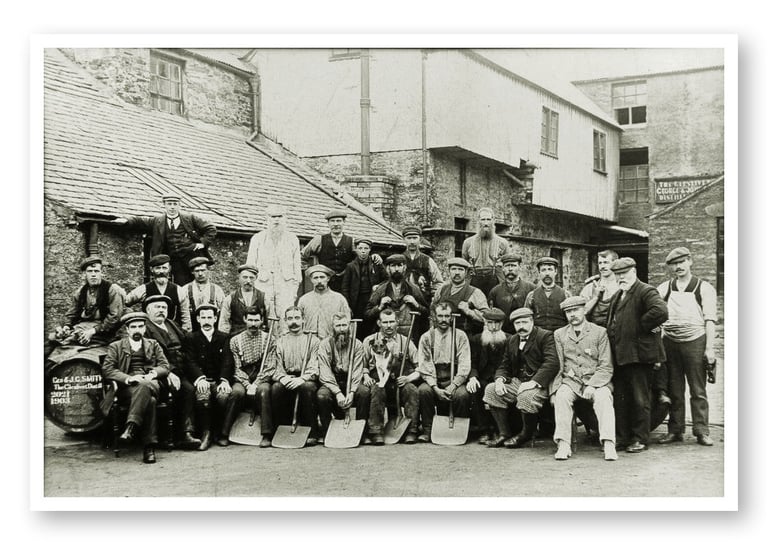
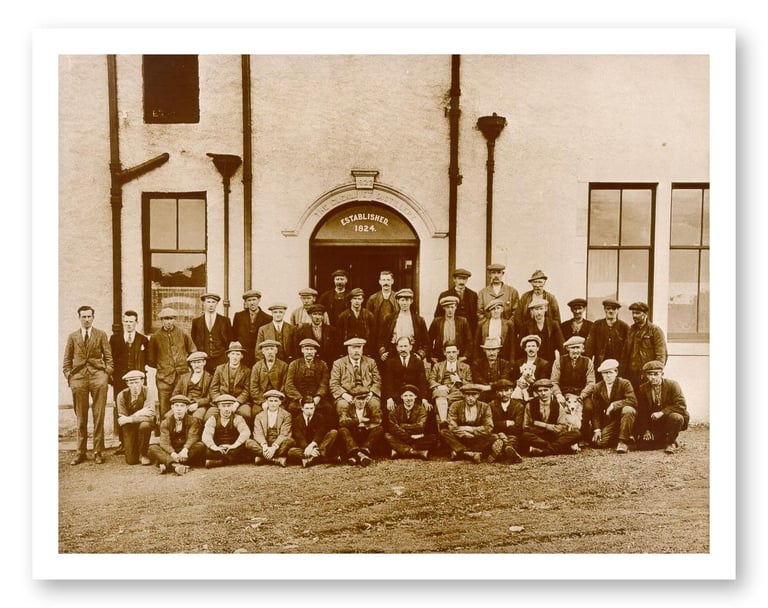
1926 Distillery Centenary photo: Peter Mackenzie (centre) and the staff of The Glenlivet
Glenlivet Distillery 1903: Peter Mackenzie 2nd from right in front row (2 years as manager)
The Cabrach and Glenlivet are historic highland communities in the centre of North-East Scotland. They are geographically 'joined at the hip' and share a landscape and social history filled with myths, legends, and the memories of the old. It is a place where you can still find and touch the remaining pieces of one of Scotland’s most important stories – how the distilling of Highland Malt Whisky began.
Sometime in the early 1960’s ( I must have been about 5 or 6 ) our family group of four were standing outside The Glenlivet Distillery as my father knocked on the front door – the one in the picture to the right. It opened - he mentioned that his grandfather had once been the manager there - and suddenly we were we being given a priviledged look around. No visitor centre in those days and all I can now remember of that visit was the dinginess, the malting floor and the heat of the stills!
One day, around about forty years later, there came to me an unexpected epihany - that not all whiskies smell or taste the same! I had, by this time, become more aware of my family roots within this historic industry, and so this set me on a journey of discovery that has, as I grow older, become increasingly fascinating and close to my heart.
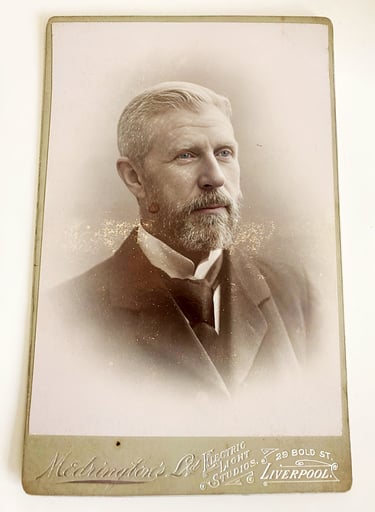
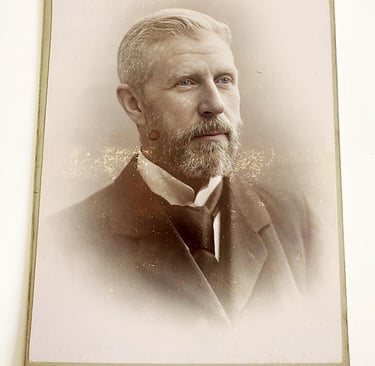
Left: The cousin of my Peter Mackenzie above ... also called Peter Mackenzie!
Their fathers were brothers and this Peter, with the support of business partners, established The Dufftown-Glenlivet Distillery in 1896. 14 year earlier he'd bought Blair Athol Distillery and both distilleries were eventually sold by his company, Peter Mackenzie & Co. Ltd., to Bells in 1933 (now part of Diageo).
The changing world and where I live
My earliest memory of whisky
Colin Mackenzie (2025)